Upside for REITs remains amid global uncertainty
This article first appeared in Capital, The Edge Malaysia Weekly on July 28, 2025 - August 3, 2025
REAL estate investment trusts (REITs) have outshone other sectors on the local bourse this year, emerging as one of the few to remain in positive territory amid global uncertainty — driven largely by US President Donald Trump’s threat to impose higher tariffs on imports as the country continues to grapple with a massive trade deficit.
So far this year, the Bursa Malaysia REIT index has risen 6.2% to 930.59 points on July 23. In comparison, the benchmark KLCI ended at 1,529.79 points, representing a decline of 6% since the start of the year.
Market experts say the defensive sector remains attractive despite significant gains. The appeal of REITs becomes more obvious when compared to other classes of defensive investment.
“Both Malaysian Government Securities (MGS) yield and fixed deposit (FD) rates have come off quite a bit. REITs can offer a dividend yield of 5% to 8%,” says TA Asset Management chief investment officer Choo Swee Kee.
Twelve-month FD rates are currently at 2.5% to 3% and the 10-year MGS yield stands at 3.4%, giving REITs a healthy spread of about 200 basis points (bps), notes Fortress Capital Group CEO Thomas Yong, who points out that it is above the long-term average.
He believes there is still upside potential for certain REITs — particularly those with strong asset quality, high occupancy rates and clear inorganic growth pipelines through accretive acquisitions or asset enhancement initiatives — as these are better positioned to deliver sustainable returns.

For investors, REITs’ steady income and positive rental reversion make them attractive in times of uncertainty. Choo also highlights that the current environment of lower interest rates benefits REITs, as lower financing costs lead to interest savings and can drive dividend payout growth.
In July, Bank Negara Malaysia lowered the overnight policy rate by 25bps to 2.75%.
UOB Kay Hian Malaysia director of strategy Vincent Khoo says his research house has a “market weight” recommendation on the sector, given how it has already outperformed in 1H2025, but he anticipates some high-yielding and laggard REITs, particularly in retail, to continue to do well.
“Retail REITs are domestic-oriented and not directly subject to the US’ capricious trade policies, and we expect most REITs to be able to deliver respectable rental reversions despite challenges of pedestrian retail sales growth and the effect of [the expanded] sales and service tax,” Khoo says.
Among the three main subsectors of the REIT landscape, fund managers and analysts continue to favour retail and industrial REITs, whereas for commercial REITs, it would depend largely on the quality of assets in the portfolio.
“Office REITs remain the least favoured, especially older assets or those outside prime transit-oriented locations, because of a persistently low occupancy rate in the Klang Valley and an unresolved oversupply,” says Yong.
He favours retail REITs, particularly those with well-established retail malls that have a high occupancy rate because they can continue to demand better rental renewal rates. Increased tourism numbers expected after a long lull are another reason for favouring retail REITs, he says.
Choo believes the industrial REIT segment remains relatively resilient because of increasing foreign direct investment in the county and the government’s continued push to attract both domestic and foreign investment.
In a July 10 REIT sector report, RHB Research notes that the stable lease structure of industrial REITs is a boon for the subsector.
“Most industrial REITs are backed by weighted average lease expiries of four to five years, offering earnings visibility and insulating them from near-term tariff risks,” it says.
Nonetheless, RHB Research’s top pick for the sector comes from the retail sub-sector. It says Pavilion REIT (KL:PAVREIT) is expected to provide more attractive dividend yields than its closest peers, backed by high occupancy rates. It has a “buy” call on the REIT, with a target price of RM1.77.
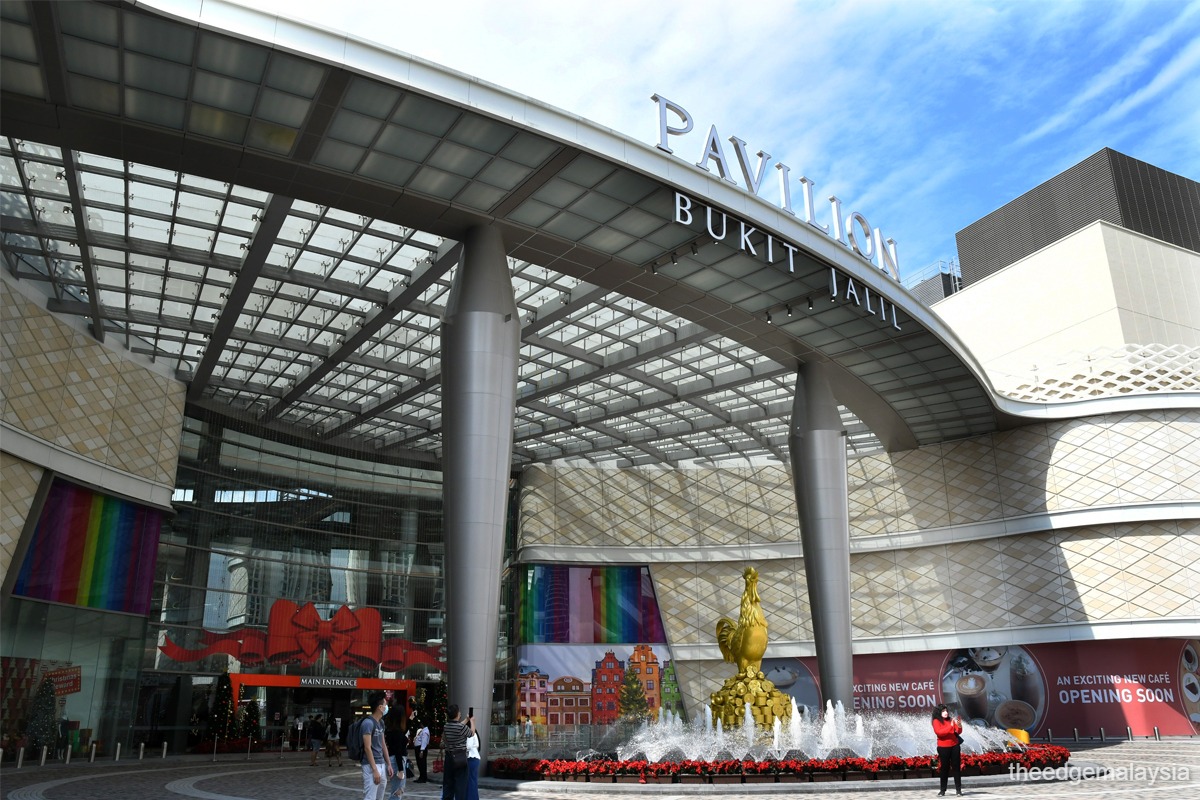
Pavilion REIT has gained a total of 16.33% this year, closing at RM1.71 last Tuesday. The REIT, which has assets in retail, commercial and hotel, derives the bulk of its net property income from its retail assets, such as Pavilion Kuala Lumpur, Elite Pavilion Mall, Intermark Mall and Pavilion Bukit Jalil, where occupancy rates are more than 90%.
The stock’s trailing 12-month yield was 5.7%; among three analyst forecasts reviewed, the estimated FY2025 yield ranged from 5.6% to 6%. All analysts have “buy” ratings, with target prices between RM1.77 and RM1.79.
Analysts also point out that the catalyst for REITs in the second half of 2025 could come from ongoing asset disposals and new acquisitions. Some REITs, such as Sunway REIT (KL:SUNREIT) and IGB REIT (KL:IGBREIT), are also undertaking asset enhancement initiatives, which Maybank Investment Bank Research says in a report in early June should further support income growth.
RHB Research expects multiple REITs to record a bump in earnings from ongoing acquisitions and renovations.
Among the 20 REITs listed on Bursa Malaysia, AmFirst REIT (KL:AMFIRST) has the highest trailing 12-month yield at 8.14% on distribution per unit (DPU) of 2.4 sen over the same period. The REIT, which has a market capitalisation of RM202.5 million, is the second-smallest on the stock exchange, ahead of Tower REIT (KL:TWRREIT).
The average daily trading volume for the counter is thin, however, hovering below 300,000 units. Over the period of one year, it has gained only 1.7%. AmFirst’s share price closed at 30 sen last Tuesday.
The eight properties in AmFirst’s portfolio are mostly office buildings, boasting a total net lettable area (NLA) of 3.1 million sq ft. AmBank Group is its largest shareholder, with a 26.73% stake, and its largest tenant, contributing 37.3% of the REIT’s total rental income.
The overall average occupancy rate for the financial year ended March 31, 2025 (FY2025), was 83.9%, a slight improvement from 83.4% in the previous financial year.
Income distribution is lower than it was five years ago. In FY2021, the DPU was 2.82 sen, translating into a yield of 6.64% based on the year-end unit price of 42 sen.
Net property income also shrank in the five-year period, from RM64.96 million in FY2021 to RM61.04 million in FY2025, although FY2025 is a 6.7% year-on-year improvement over FY2024’s RM57.21 million.
The REIT says in its annual report that its performance reflects improving rental contributions, despite a marginal increase in property expenses due to higher maintenance and operational costs.
Sentral REIT (KL:SENTRAL), another high-yielding REIT, has mainly office assets and offers a trailing 12-month distribution yield of 8%. The REIT has a NLA of 2.56 million sq ft and an average occupancy rate of 84%, according to its 2024 annual report. Some of its properties are Sentral Building 1 to 4, located in Cyberjaya; Menara Shell, in Jalan Tun Sambanthan in Kuala Lumpur; and Platinum Sentral, in Jalan Stesen Sentral in KL.
Despite the office glut in the Klang Valley, Sentral REIT has remained resilient, with a five-year earnings compound annual growth rate of 2.1%, notes Hong Leong Investment Bank Research in a May 12 report. It maintains a “hold” rating, viewing the stock as fairly valued
Analysts say Sentral REIT’s move to diversify beyond pure office assets bodes well for the long term.
“It alleviates investor concerns on the challenging office market, but we highlight that its gearing ratio may increase further in the near term, depending on the timing of upcoming acquisitions and disposals,” says RHB Research in a May 14 report on Sentral REIT.
RHB Research has a “buy” call on the stock, with a target price of 93 sen and a forecast DPU yield of 9% for 2025.
Sentral REIT reported a gearing of 45% in the first quarter ended March 31, 2025. However, its interest coverage remains healthy at 2.58 times, says RHB Research, adding that the potential disposal of its vacant Wisma Sentral Inai — valued at RM150 million — could lower gearing to 41%.
Sentral REIT’s management has said that while it is open to leasing out Wisma Sentral Inai, it would prefer to divest it to redeploy the proceeds for future acquisitions.
Over the last five financial years, the net realised income of Sentral REIT has been uneven. While it grew in FY2021 to RM84.49 million from RM80.95 million in FY2020, net realised income fell to RM73.63 million in FY2022 before picking up again in FY2023 to RM74.22 million and growing to RM79.82 million in FY2024.
Its DPU was generally on a downtrend over five years, declining from 7.08 sen per unit in FY2020 to 6.36 sen in FY2024. At the same time, its unit price has doubled over five years.
So far this year, Sentral REIT has gained 5.16% to close at 80 sen last Tuesday, valuing the REIT at RM950.4 million.
Meanwhile, the best performer in terms of unit price year-to-date is IGB REIT, having gained close to 32% since the start of the year. At the close last Tuesday, the REIT settled at RM2.74 per unit, bringing its market cap to RM9.92 billion.
While IGB REIT has been paying out higher DPU over the last five years, from 6.75 sen in FY2020 to 10.7 sen in FY2024, the unit price has also been running higher in the same period, more than doubling from RM1.34 on July 23, 2020.
In the recent quarter ended March 31, 2025 (1QFY2025), IGB REIT declared a DPU of 3.19 sen. Based on a trailing 12-month DPU of 10.92 sen and unit price of RM2.74 last Tuesday, the trailing 12-month DPU yield is 3.97%, among the lowest of the 20 REITs listed on Bursa Malaysia.
Among analysts covering the REITs surveyed by The Edge, FY2025 yield forecasts ranged between 4.6% and 5.1%.
CGS International Securities, which has a dividend yield forecast of 5.1% for FY2025, observes in a June 25 report that it is lower than the sector average of 5.8% and could limit near-term upside potential.
Maybank IB Research points out that the acquisition from its sponsor IGB Bhd had been long awaited. “Its integration within the [Mid Valley Southkey development in Johor Bahru], which includes office towers, hotels and residential units, is expected to drive consistent footfall and retail traffic, supporting occupancy and rental stability. Coupled with the mall’s proximity to Singapore, [these factors support] upside to valuations over time,” adds the research house.
Analysts view the acquisition as a positive, as it is expected to enhance the REIT’s income and geographical profile over the long term.
In the last five financial years, IGB REIT’s net property income has increased to RM455.71 million in FY2024 from RM316.67 million in FY2020. Net profit rose to RM579.76 million in FY2024 from RM236.79 million in FY2020.
In 1QFY2025, net property income increased 7.1% y-o-y to RM133.12 million and net profit gained 6.9% y-o-y to RM106.58 million.

Save by subscribing to us for your print and/or digital copy.
P/S: The Edge is also available on Apple's App Store and Android's Google Play.
The content is a snapshot from Publisher. Refer to the original content for accurate info. Contact us for any changes.
Related Stocks
| AMFIRST | 0.320 |
| BURSA | 8.830 |
| IGBB | 3.740 |
| IGBREIT | 2.800 |
| PAVREIT | 1.850 |
| REIT | 971.440 |
| SENTRAL | 0.780 |
| SUNREIT | 2.450 |
| SUNWAY | 5.630 |
| TWRREIT | 0.305 |
Comments